
By Darren Wise, Owner & Lead Guide, Peak Potential Adventures
The Khumbu Glacier cracks and creaks through the night.
It's a sound you don't forget. I've spent nights at Everest Base Camp on more than one expedition, most recently in 2025. During the day, there's plenty to take in. But lying in a tent after dark, listening to the glacier, makes you very aware of where you've chosen to sleep.
Most trekkers reach Base Camp, take their photographs and return to Gorak Shep for the night. For our group in April 2025, there was a different sense of anticipation. We knew we weren't heading straight back down the valley; we'd be spending the night among the expedition teams. I'd stayed here before, but sharing that opportunity with our trekkers made the arrival especially memorable.
Time to take it in
Arriving at Everest Base Camp is a big moment. You've walked for days to get there, and it's a place many people have thought about for years before making the trek.
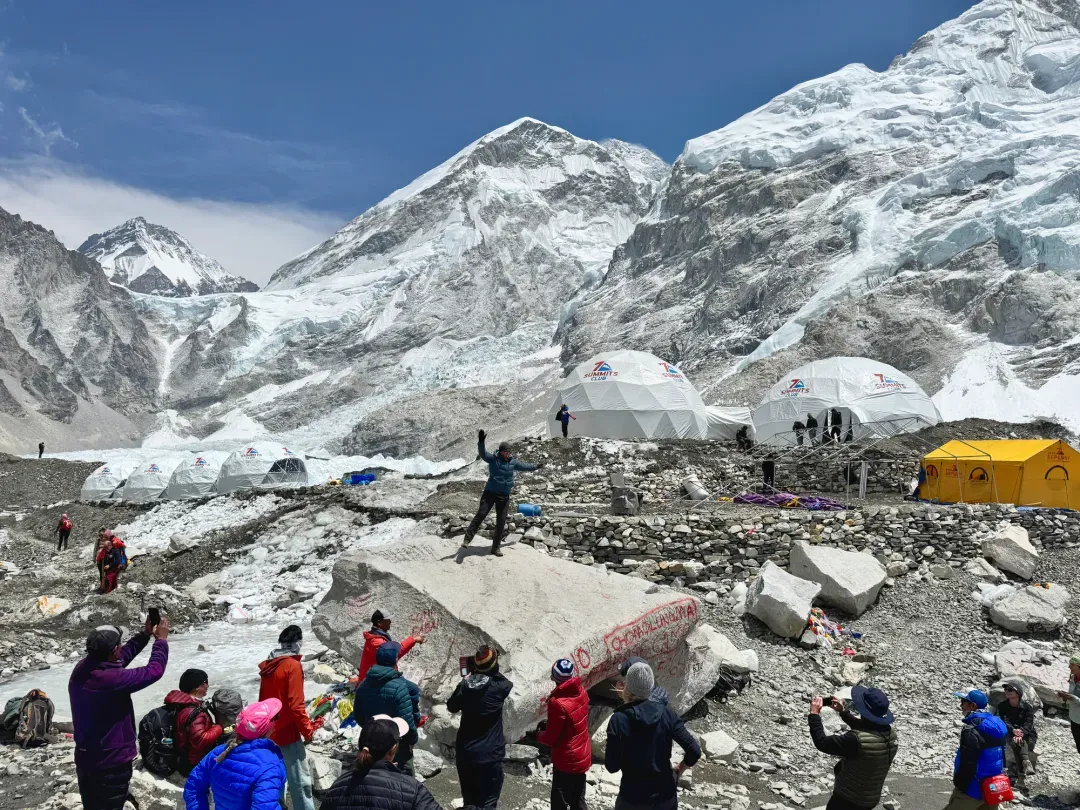
But Base Camp is more than the point where trekkers turn around. During the spring climbing season, it feels like a small mountain city, with expedition tents spread across the glacier, climbers moving between camps and Sherpa and support teams preparing equipment. We saw people in heavy mountaineering boots and crampons getting ready for the Khumbu Icefall and the higher camps. It's a working expedition, not just the backdrop to a photograph.
For our trekking group this was the destination. For the climbers around us, it was the starting point for another, much more technical phase of their journey. Having the night there gave us time to notice that contrast.
Surrounded by giants
The scale is something else. You're on the glacier, with enormous walls of rock, snow and ice rising around you. Even the expedition tents look small against the mountains.
“Surrounded by giants” is the way I've always thought of it.
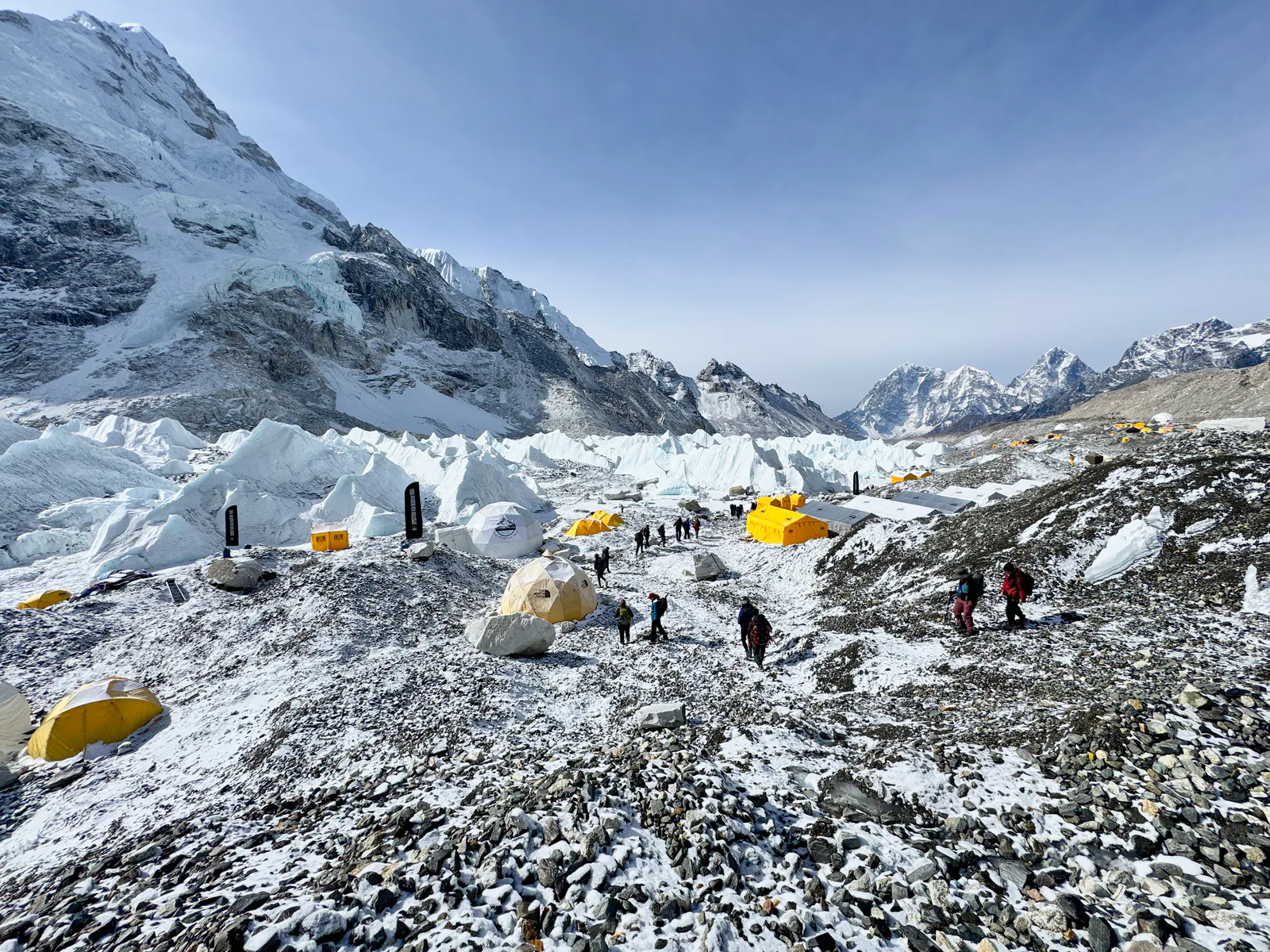
Something that surprises people is that you don't get the famous full view of Everest's summit from Base Camp itself. For that, Kala Patthar is the better vantage point. At Base Camp, it's the sheer closeness of the mountains and the Khumbu Icefall that makes the setting so memorable.
Life inside Everest Base Camp
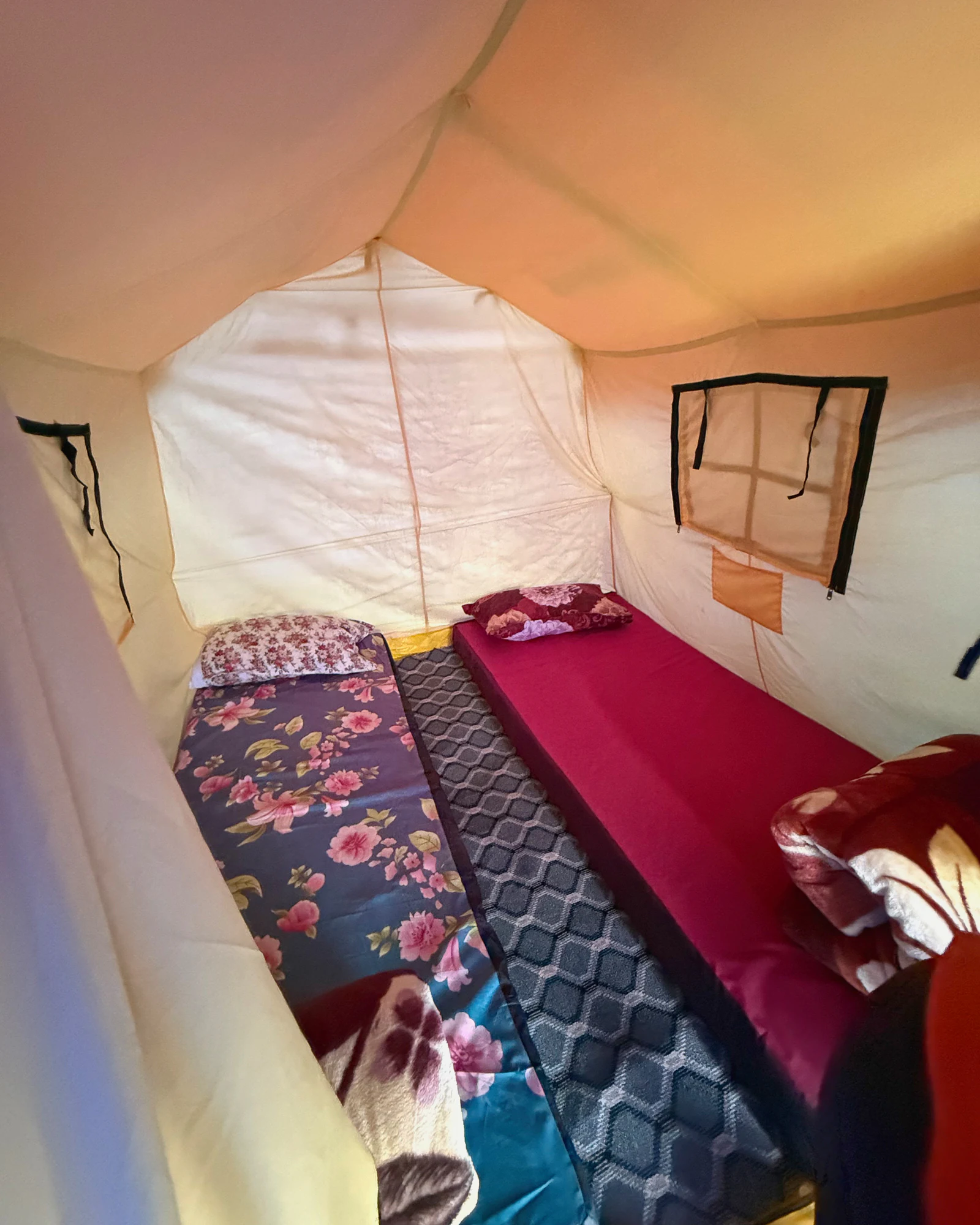
After spending most of the trek in teahouses, arriving at a tented expedition camp felt like stepping into another world. The sleeping tents were proper expedition tents, much larger than the small trekking tents some people imagine. You could almost stand upright inside them, and our accommodation was twin-share.
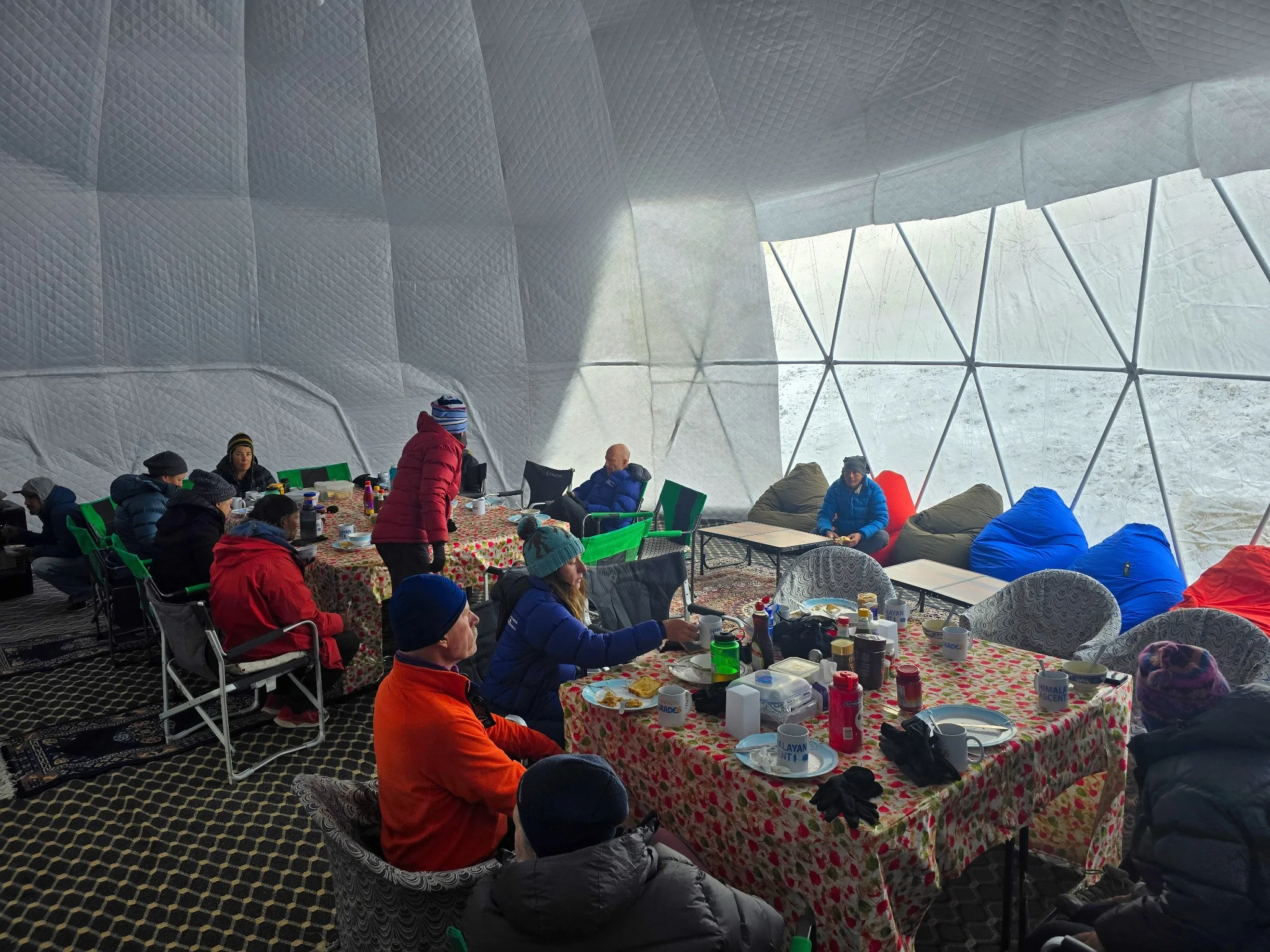
The communal dining dome was another surprise. Inside were dining tables, comfortable chairs and beanbags, with large transparent window panels looking out across the glacier and surrounding mountains. It felt warm and sociable, even while the landscape outside reminded you just how high we were.
I remember settling into a beanbag and looking out towards the mountains. We could sit together over a meal, talk about the trek and take in the view without having to rush off. That contrast — a comfortable gathering place in the middle of an expedition camp on the glacier — has stayed with me.
As evening approached, the temperature dropped and people generally went to bed early. Despite the comforts of the camp, it was still quite different from a teahouse. You're camping on the glacier at altitude, and broken sleep can be part of the experience.
I remember the glacier cracking and creaking during the night. It's hard to convey that in a photograph. You can't see much in the dark, but you can certainly hear where you are.
Exploring the Khumbu Icefall
During our time at Base Camp, I took our trekking group down towards the Khumbu Icefall to see the glacier and its enormous ice formations more closely. From a distance the Icefall already looks imposing. Being nearer those great walls and towers of ice gives you a different sense of the scale of the place.
We were exploring the area around the Icefall, not following the technical climbing route towards Camp 1. It was a chance for our trekkers to see more of the glacier environment and better appreciate the terrain the climbers around us were preparing to face.
The Icefall before dawn
At one point during the night I got up to use the toilet. The sky was clear, and there were stars everywhere. Looking towards the Khumbu Icefall, I could see small points of light moving through the darkness: climbers' head torches as teams made their way towards higher camps.
It was an extraordinary sight. Our group had reached the goal of our trek; for those climbers, another stage of their expedition was beginning. Teams often move through the Icefall during colder hours, when the ice may be comparatively more stable, but the hazards remain serious.
The Icefall route and expedition schedules change from season to season, so seeing that movement isn't something anyone should count on during a particular visit. It's simply one of the things I've been lucky enough to witness.
More than a photograph
For me, one of the most satisfying parts was giving our trekking team the chance to experience more than the usual daytime visit. They had time to take in the atmosphere of a working expedition camp, see more of the glacier surroundings and listen to the Khumbu through the night. It wasn't about encouraging anyone to climb Everest. It was about helping them understand a place they had travelled so far to reach.
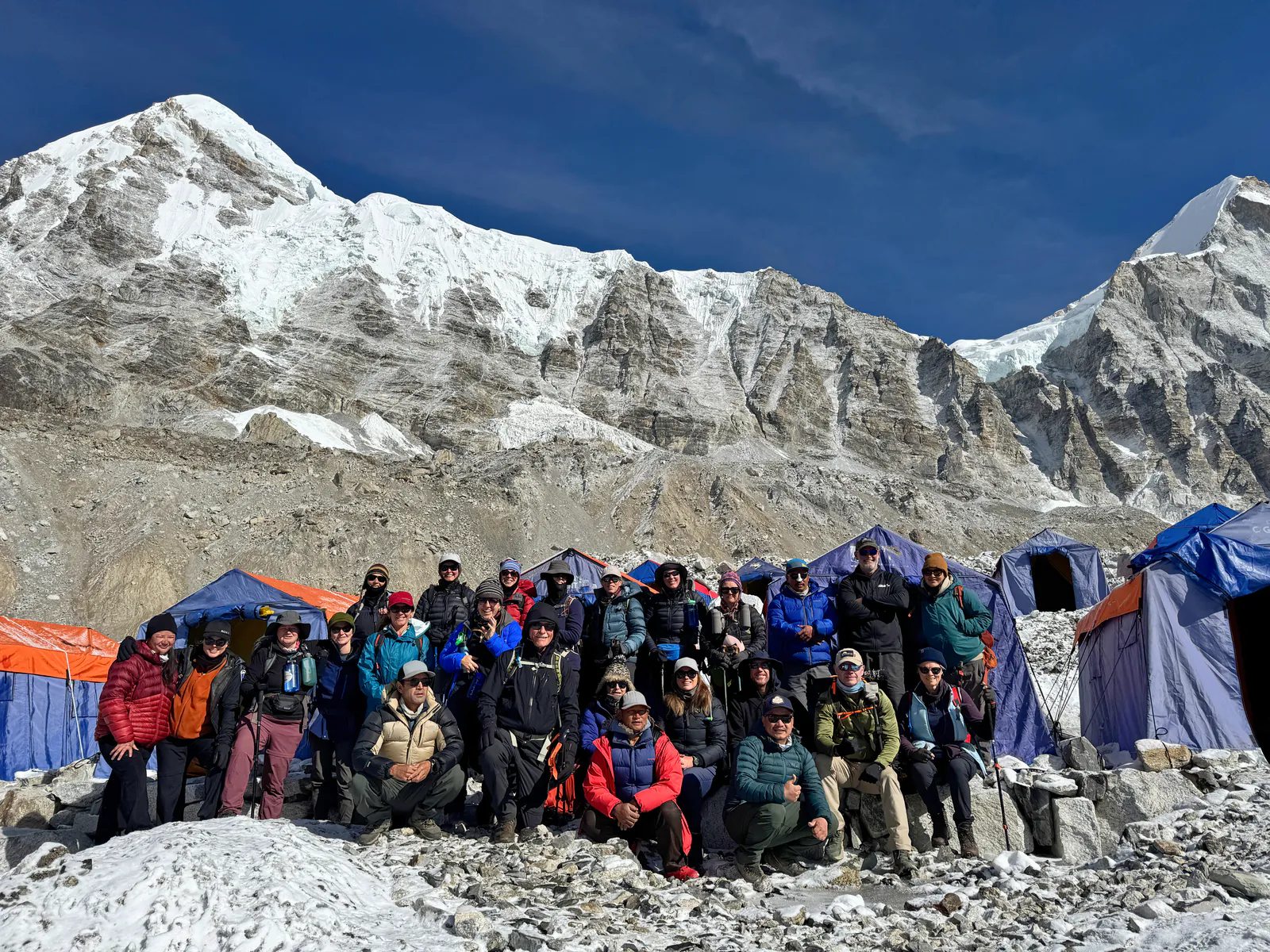
It's the little moments I remember most: the conversations in the dining dome, the glacier's sounds and those lights threading through the darkness. Having more time in a remarkable place made all the difference.
If Everest Base Camp is on your list, we're now taking expressions of interest for our 2028 journey. Dates and final arrangements haven't been confirmed. You can learn more about the Everest Base Camp adventure and register your interest through PPA.
Want more stories like this? Subscribe for occasional expedition news and useful preparation advice.
Get Adventure Updates by email →