
By Darren Wise, Founder & Lead Guide, Peak Potential Adventures
I have carried a Whippa Alpine AP 50 and an earlier Summit Gear-era Overland 40 on guided and personal treks in Africa and Nepal. They are light, simple roll-top packs that suit how I move through the mountains. After several expeditions, what stands out is comfort and the ability to adjust the pack to the actual load—not a spectacular laboratory weight figure.
There is one important distinction for buyers: my white-and-burnt-orange Overland 40 dates from the Summit Gear period before the Whippa brand launched. My experience with it is useful for understanding the design, but it is not a field test of the latest production Overland 40.
Review disclosure: All three packs discussed here—my two and my partner’s—were purchased with a 20% professional outdoor-guide discount. There was no payment, free gear, additional benefit or affiliate arrangement. I know people associated with Summit Gear, and Whippa has not reviewed this article before publication. These are my own observations.
Quick verdict
For supported trekking and day hiking, I like the compact Overland 40. When I want another 10 litres and mountain-specific attachment options, I take the Alpine AP 50. I find both similarly comfortable. If your priority is lots of zipped compartments, a very rigid frame or resistance to rough handling on sharp rock, a more conventional pack may suit you better.
Exactly which packs went where?

Kilimanjaro: day-pack loads with porter support
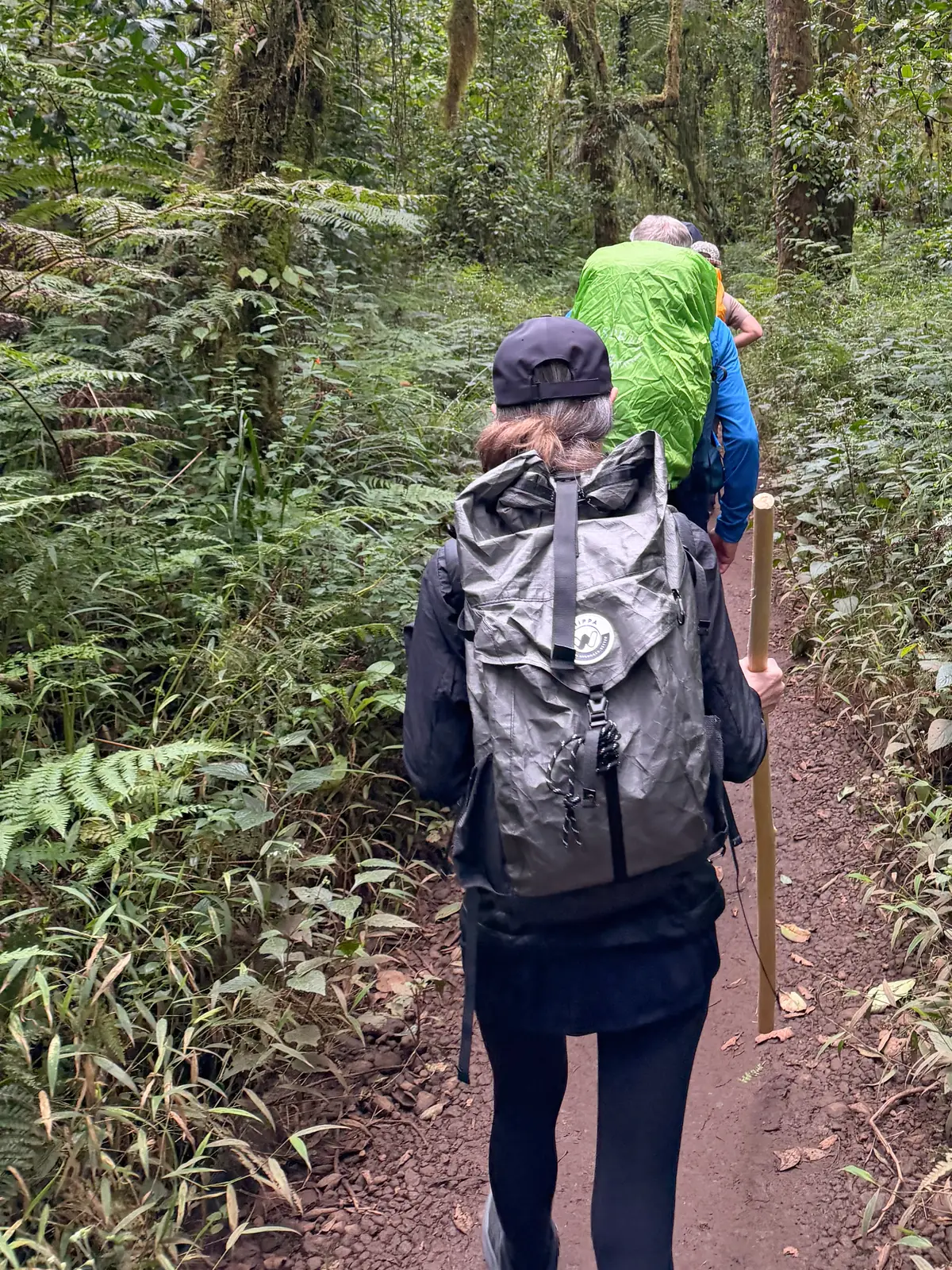
On the seven-day Machame route in August 2026, I carried the Alpine AP 50. Photographs from 10 and 13 August confirm that trip and the pack shown. Porters carried our main overnight equipment, while I carried the day essentials: water, lunch, warm layers, rainwear and a medical kit for my role as guide. My load generally sat between 7 and 10 kg. That is an account of day-pack comfort on a supported trek, not a test of carrying an unsupported expedition load.
The AP 50 felt comfortable and balanced despite having less rigid structure than some traditional framed packs. I did not need the optional hood or helmet net on Kilimanjaro. My older white Overland 40 went up the Machame route in August 2023 and has also accompanied me to Everest Base Camp on two separate trips, in April 2023 and April 2024, based on my recollection.

On the Kilimanjaro trips described here the weather was generally good, with a little rain on the final walk through rainforest from Mweka Camp towards the gate. I have not normally used an external rain cover on these packs and did not have problems with water getting into my gear on those occasions. That is a modest real-world observation, not a claim that the packs are fully waterproof in prolonged rain.

The AP 50 on the Ama Dablam trek
In October 2025, my partner and I spent 11 days trekking in the Himalayas, including Ama Dablam Base Camp. This was a personal trip, not a visit to Everest Base Camp. I carried the black AP 50 with roughly 10 kg because I was taking some of my partner’s equipment as well. The larger capacity was useful without feeling like I had to fill every litre.
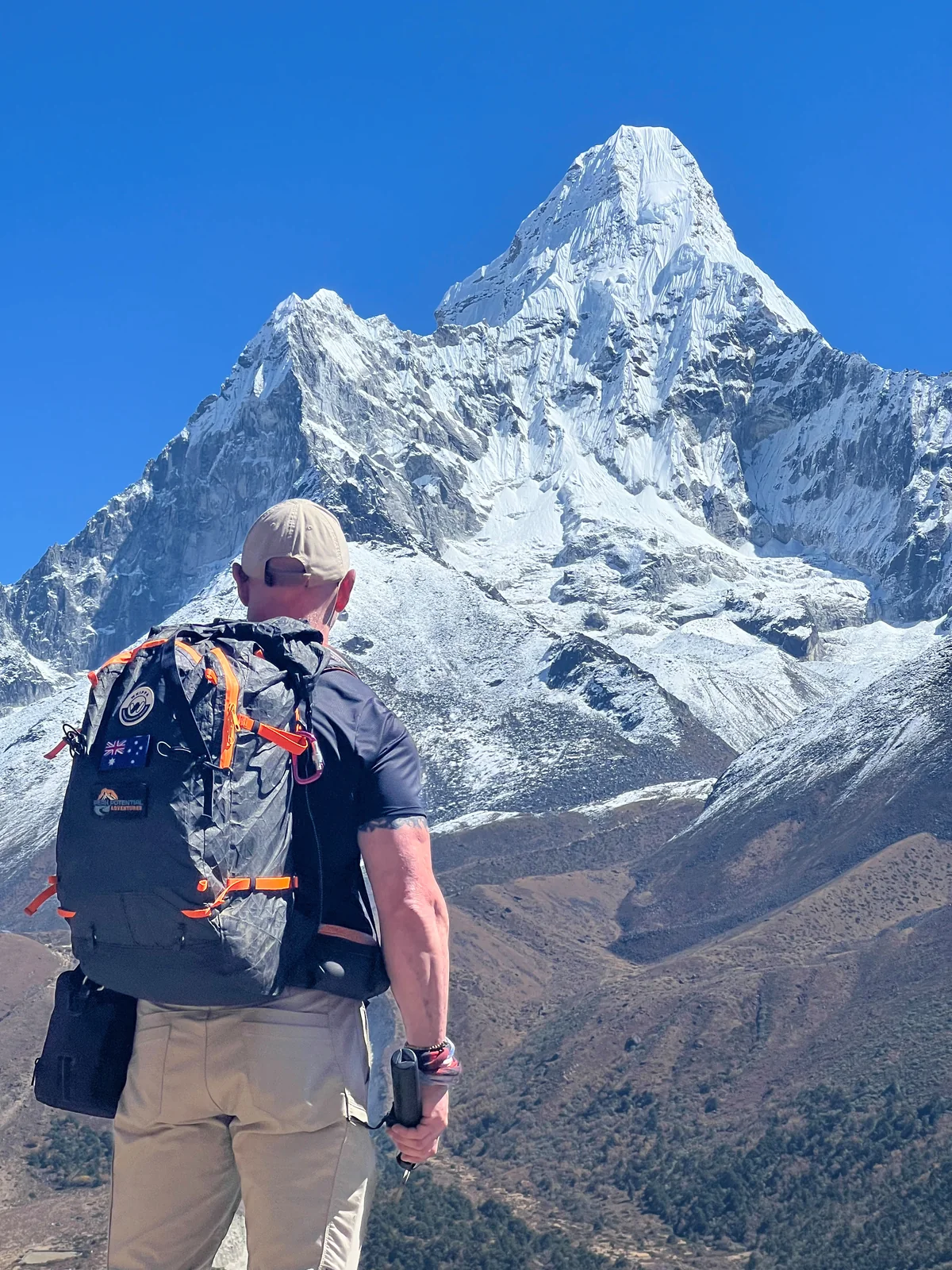
I have fitted out the AP 50 with an Expedition Hood 6 and a Helmet Net for future mountain use. The hood offers about 6 L of extra capacity, and the net is intended for securing a climbing helmet. I have not yet used those accessories in technical climbing conditions, so I am judging the pack itself on the trekking I have actually done.
Comfort, fit and packing: where the designs earn their place
Both packs have one main compartment, external storage and a roll-top. They feel very similar to carry, so my choice is mostly about space and the job ahead. The roll-top is particularly practical: with fewer items I can roll it further down and keep the pack compact, while a fuller load has room to expand. I find that easier to manage than a tall, stiff pack that keeps its shape when half empty.
I keep heavier equipment low and reasonably close to my back, with things I need often near the top or in an accessible pocket. As a guide, the medical kit still needs to be reachable; there is no point achieving ideal theoretical weight distribution if urgent equipment is buried. The trade-off is that you need an organised packing system—there is no large panel zip to reveal everything at once.

My partner used her grey, Whippa-badged Small Overland 40 on Kilimanjaro in 2026. She is petite, and the narrow shape works well for her without restricting arm movement as much as a broader bag could. That is my observation of how the pack fits her, not a quotation from her. My own white Overland 40 is the older Summit Gear-branded model; her grey pack has a Whippa logo, so I do not present the two as the same production version.
Durability and weather: my experience, and the limits
After the trips above I have not damaged either of my packs. The white material shows dirt more readily, but I rather like the worn-in look. I still avoid dragging or dropping lightweight fabric over sharp rock. High strength for weight does not make a pack immune to punctures or abrasion, and I would not treat one like a heavy canvas work bag.
Whippa calls its current packs weatherproof rather than completely waterproof, even though it uses waterproof fabrics and sealed seams. I use dry bags for things I absolutely cannot afford to wet. My light Kilimanjaro rain experience supports my confidence for those particular conditions; it does not replace a proper sustained-rain test.
Current Whippa specifications: what buyers actually get
The following figures are from the current Whippa product pages, checked 18 November 2026. They describe today’s models; they should not be used as measured specifications for my older Summit Gear-built Overland packs.
On the AP 50, Whippa also lists reinforced mud guards at high-wear points and ice-axe holders. The published 980 g is a manufacturer figure, not a weight I have measured. The AP 50 was developed with mountaineer Allie Pepper. The optional Expedition Hood 6 is sold separately, as is the Helmet Net.
For current products, see the Overland 40 product page and the Alpine AP 50 product page.
Sizing, lead times, repairs and where the packs are made
Choose harness size by torso/back length, not overall height. On Whippa’s current Overland 40 (35–40 L) size chart, Small is up to 43 cm, Medium 43–48 cm, and Large 48 cm or above. The Alpine AP 50 uses the 45–90 L fit chart: Small up to 43 cm, Medium 43–51 cm, and Large 51 cm or above. Check the model-specific size guide and try a realistically weighted pack where possible; do not assume the same Medium fit on both models. For the source chart, see Whippa’s back-length size guide.
Both current product pages give an approximate 16-week lead time when a pack is marked “Backordered, shipping soon”. That is not a promised delivery date. Whippa also lists 60-day returns for qualifying purchases and offers pack repairs in Katoomba. For an upcoming expedition, I would confirm the current order date and policies directly before buying.
Not every Whippa product should be described as Australian-made. The brand states that Premium Colour Range packs are made in Katoomba and that certain Standard Colour Range models are produced in China. My older white-and-burnt-orange Overland was a special Summit Gear-era build, and personal hook-and-loop patch panels were added so I could attach Peak Potential Adventures and Australian-flag patches. My black-and-orange AP 50 also has personal patches. Neither the patches nor the older custom colour scheme should be mistaken for standard options on current packs.
Who should buy which pack?
For a supported multi-day trek, a long day walk or a very light overnight, the Overland 40 is the more compact choice. The AP 50 suits me when I want extra clothing space, expect to share some of the load, or need the option of ice axes and other mountain equipment. Neither is automatically the right choice for heavier, unsupported loads; use Whippa’s pack guidance and test the fit with what you actually carry.
The best reason I can offer for considering one is how uncomplicated it feels on the trail. The clearest reason not to buy one is equally simple: if you like rigid structure and many compartments, this minimal layout may frustrate you.
Frequently asked questions
Is the Overland 40 big enough for Kilimanjaro?
It can be for a supported itinerary where porters carry the overnight load, if your day equipment fits and the loaded pack is comfortable. I used my older Overland 40 on a seven-day Machame climb in 2023.
How do I choose Small, Medium or Large?
Measure your torso/back length, then use Whippa’s chart for the particular pack. The Overland 40 lists Small up to 43 cm, Medium 43–48 cm and Large 48 cm or above. The AP 50 lists Small up to 43 cm, Medium 43–51 cm and Large 51 cm or above. Fit-check with your actual trekking load if possible.
How long will a Whippa pack take to arrive?
When a listed Overland 40 or AP 50 is backordered, Whippa’s product pages currently estimate about 16 weeks. Recheck before ordering; the estimate is not guaranteed.
Will Whippa repair a damaged pack?
Whippa advertises a repair service in Katoomba. Ask the company about the exact damage, cost and turnaround time.
Are these packs waterproof?
Whippa describes the finished packs as weatherproof, not fully waterproof. I had no water-ingress issue in light rain on Kilimanjaro, but I still protect critical gear in dry bags.
Final verdict
I would happily take either pack trekking again. My older white Overland 40 has been on Kilimanjaro and two Everest Base Camp trips; the black Alpine AP 50 is documented on Kilimanjaro in August 2026 and accompanied me on the October 2025 Ama Dablam Base Camp trek. With roughly 7–10 kg day loads, I have found both comfortable. I choose by the space I need, how I prefer to pack, and whether I want the AP 50’s alpine-specific options. A careful packing system and sensible treatment of lightweight fabric matter more to me than a headline gram figure.
Related reading and trip planning
- Kilimanjaro guided trekking
- Everest Base Camp trekking
- HOKA Anacapa boot field review
- Sleeping at Everest Base Camp
Want more stories like this? Subscribe for occasional expedition news and useful preparation advice.
Get Adventure Updates by email →